
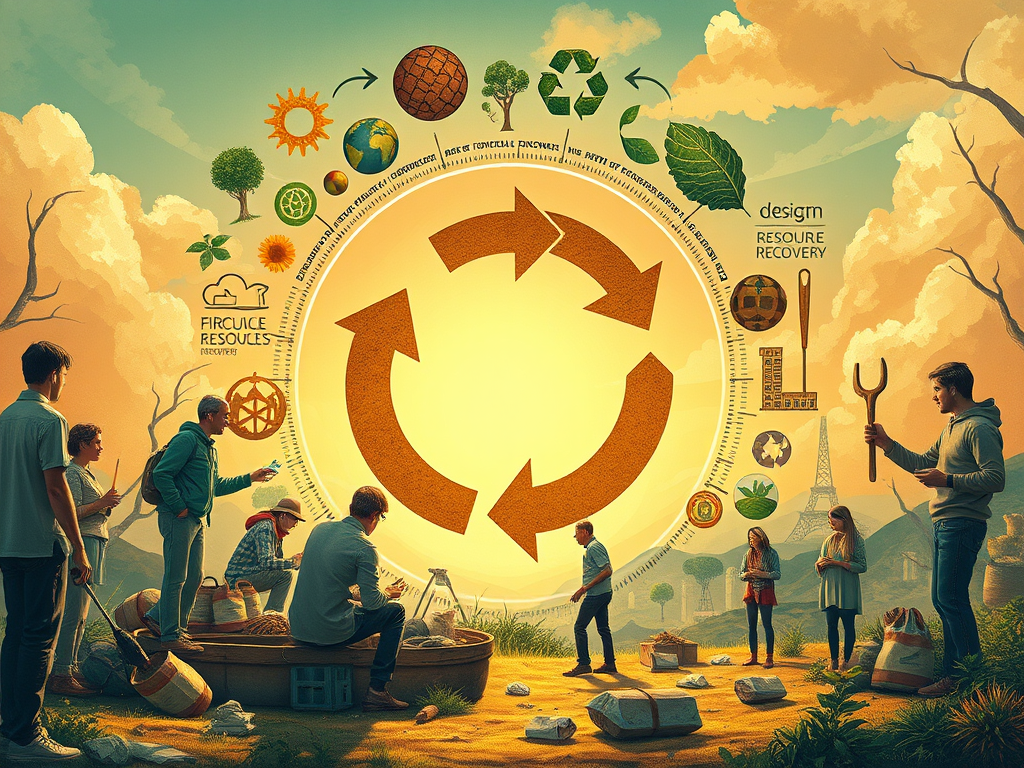
From Linear to Circular Thinking
The traditional “take–make–dispose” industrial model depletes natural resources and generates waste at unsustainable rates. The circular economy (CE) redefines this paradigm by designing out waste, keeping materials in use, and regenerating natural systems.
Core Principles
- Design for longevity and repairability – extending product life cycles.
- Resource recovery and recycling – turning waste into feedstock.
- Sharing and service-based models – shifting from ownership to access (e.g., car-sharing, tool libraries).
- Industrial symbiosis – where one industry’s waste becomes another’s raw material.
Economic and Environmental Benefits
A circular approach reduces emissions, saves resources, and creates green jobs. The Ellen MacArthur Foundation estimates that adopting CE principles could yield trillions in global economic benefits by 2030.
Challenges and Transition Pathways
To scale circularity, industries must embrace eco-design, digital traceability, and supportive policies such as extended producer responsibility (EPR). Consumer behavior and corporate transparency are equally vital in realizing a circular future.
Leave a Reply