
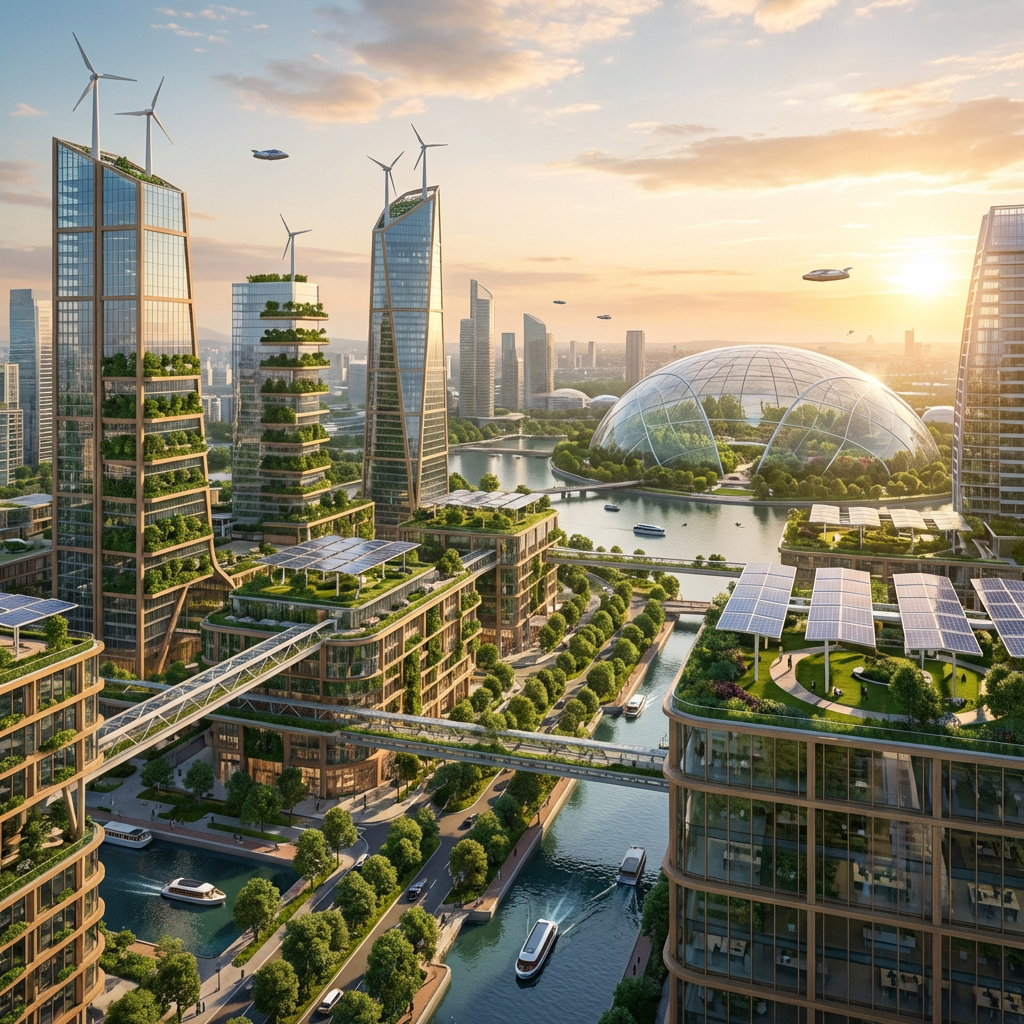
While mitigation efforts aim to reduce emissions, climate resilience focuses on adapting systems to inevitable change.
Engineering for resilience requires a shift from optimisation under fixed conditions to robustness under uncertainty.
Key domains of resilience include:
- Infrastructure (flood-resistant design, heat-tolerant materials)
- Energy systems (decentralised and redundant networks)
- Urban planning (green spaces, water-sensitive design)
A resilient system is characterised by:
- Redundancy
- Flexibility
- Adaptive capacity
Importantly, resilience is not purely technical—it is also social and economic. Communities must be equipped with the knowledge and resources to respond to disruptions effectively.
The future will not be defined by stability, but by adaptability. Designing for resilience ensures that systems continue to function—even under stress.
Leave a Reply