
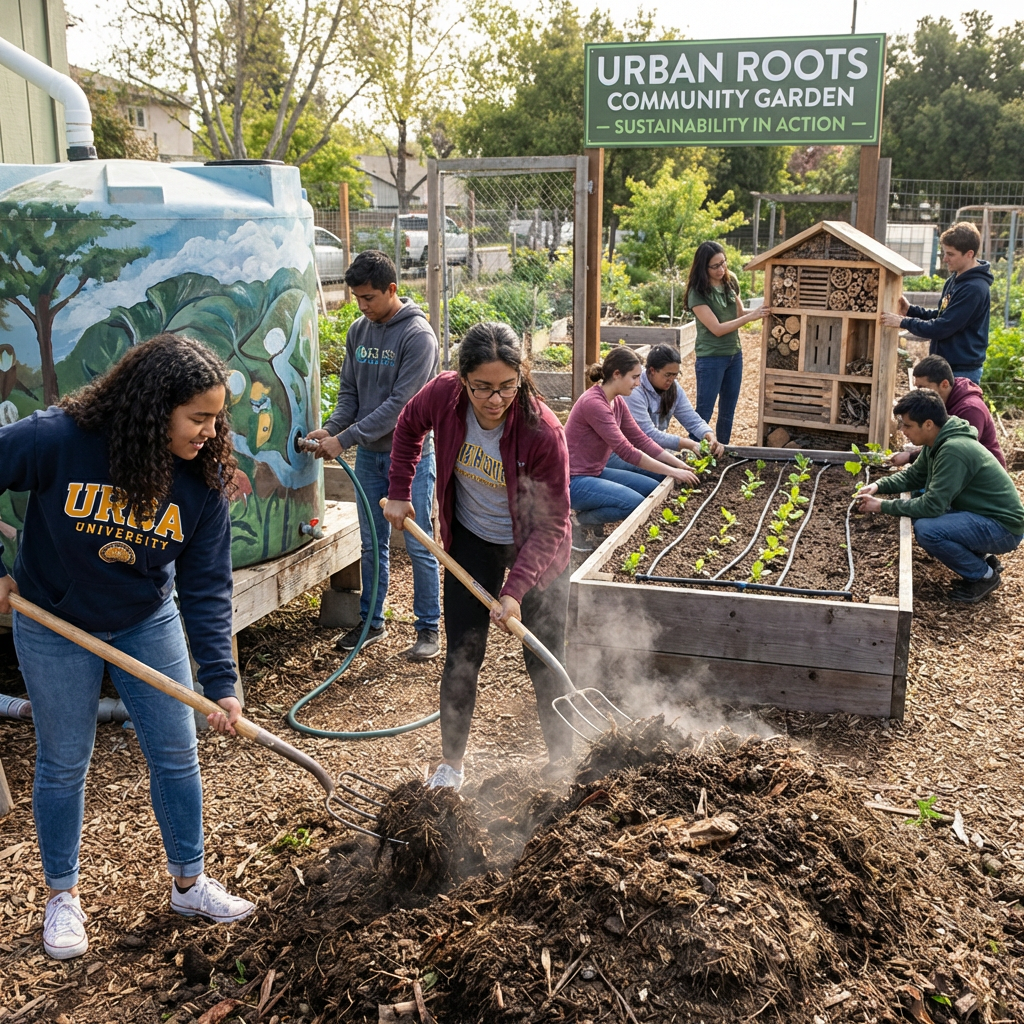
Sustainability awareness has reached unprecedented levels, yet a critical gap remains between understanding and implementation. While individuals increasingly recognize the urgency of climate change, many lack the structured pathways required to translate knowledge into measurable action.
At its core, sustainability education must evolve beyond conceptual literacy. It should instead function as a decision-making framework, equipping individuals and organizations with tools to evaluate trade-offs, optimize resource use, and implement scalable solutions.
Practical sustainability education operates across three layers:
- Behavioural change — daily decisions such as consumption, energy use, and waste reduction
- System thinking — understanding interconnected environmental, economic, and social systems
- Technological literacy — interpreting renewable energy, smart grids, and carbon metrics
The future of sustainability depends not on more information, but on structured application. Education platforms must therefore transition into action-oriented ecosystems, where learning directly informs implementation.

Leave a Reply