
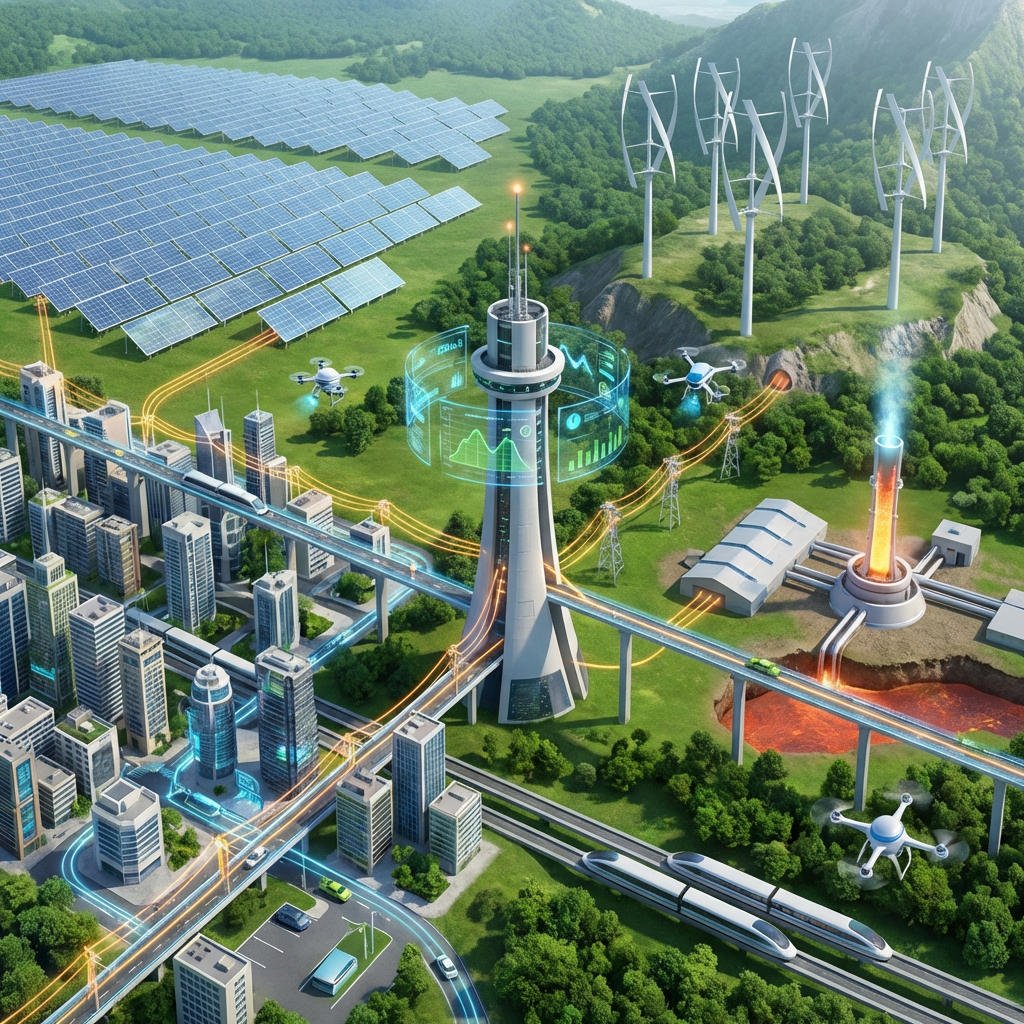
The transition to renewable energy is not constrained by generation capacity alone—it is fundamentally a systems integration problem.
Smart grids represent the backbone of this transition. Unlike conventional grids, which operate on unidirectional power flow, smart grids introduce:
- Bidirectional energy exchange
- Real-time monitoring and control
- Demand-response optimisation
This enables higher penetration of intermittent sources such as solar and wind without compromising grid stability.
From an engineering perspective, smart grids rely on:
- Distributed sensors (IoT-enabled)
- Advanced control algorithms
- Data-driven forecasting models
The implications are profound. Smart grids transform energy systems from passive infrastructure into adaptive networks, capable of self-regulation and efficiency optimisation.
For individuals and businesses, this translates into:
- Lower energy costs
- Reduced carbon footprint
- Greater energy resilience
The question is no longer whether smart grids will dominate—but how rapidly systems can be upgraded to support them.

Leave a Reply